BottleRock Napa Valley 2026 day two: punk tributes, grunge legends, and the Foo Fighters turning wine country into a rock cathedral.
If day one of BottleRock 2026 set the bar with ethereal singer-songwriters, pyrotechnic rock, and a headlining set for the ages, day two arrived with its boots laced tighter and its amplifiers turned several notches higher. Saturday leaned hard into the rock and grunge DNA that has always been one of this festival’s great pillars, delivering a cross-generational marathon that moved from a teenage surf-punk trio on the main stage at noon, all the way through to the most beloved rock band on the planet closing out the night under the Napa stars. In between, festivalgoers were treated to one of the most genuinely surprising and beloved sets of the entire weekend, a soul-bearing performance from a Mexican rock trio who have been quietly taking the world by storm, and a British frontman who reminded everyone in attendance that charisma and connection have no expiration date. Day two of BottleRock 2026 was, quite simply, the most stacked Saturday this festival has served up in years — and it did not waste a single minute of it.
Saturday morning belonged entirely to The Alive, the teenage surf-punk hard rock trio from Santa Cruz who opened the Prudential Stage at the stroke of noon with the kind of ferocious, unhesitating energy that seems to come only when youth and talent collide at full force. The Alive tore into their opening set with distorted riffs, thunderous drums, and a crackling, kinetic chemistry that had the earliest arrivals of the day stopping dead in their tracks and pressing toward the stage with grins spreading across their faces. Guitar work startling in its precision and aggression, the band who already command the stage with the authority of veterans who have been doing this for decades, not months. There is a rawness and a hunger to The Alive that is impossible to manufacture and irresistible to witness, the kind of unvarnished ambition that makes you feel the ground shifting slightly beneath your feet. Coming off their breakout appearance at BottleRock 2025, the band returned to the festival with a maturity and a confidence that suggested they have been listening, learning, and growing at a remarkable pace. By the time they closed out their noon set, the crowd had tripled in size, many of whom had been drawn by the simple, irresistible magnetism of a band playing like their life depends on every note.
One of the most delightfully surreal and joyously lovable moments of the entire BottleRock 2026 weekend arrived midday Saturday, when The Return of Jackie and Judy — the Ramones tribute band assembled by Sleater-Kinney’s Carrie Brownstein and Corin Tucker alongside their beloved Portlandia collaborator and comedian Fred Armisen — took the Prudential Stage and proceeded to deliver a set of pure, leather-jacketed, blistering punk rock that had the festival grounds grinning from ear-to-ear. Armisen, stationed behind the drum kit in a glorious Ramones wig, looked like a man living out a lifelong dream in real time, battering the skins with gleeful abandon while checking in with the crowd between songs with the impeccable deadpan timing you’d expect from one of Saturday Night Live‘s most beloved cast members. Named for a deep cut from the Ramones’ 1980 album End of the Century, the band came into existence through the unlikely alchemy of a John Mulaney wrap party and two sold-out Halloween shows in Portland, and at BottleRock, it felt like the kind of one-of-a-kind, unrepeatable festival moment that people talk about for years afterward. The set included a reverent charge through “Sheena Is a Punk Rocker,” a beautifully harmonized “I Wanna Be Your Boyfriend,” and a ferocious closing run through “Gimme Gimme Shock Treatment,” “I Can’t Make It on Time,” and “Do You Remember Rock ‘n’ Roll Radio?” — each one delivered with the combined force of Sleater-Kinney’s extraordinary musicianship and Armisen’s infectious, comedy-inflected punk spirit. The crowd may have been smaller than for some of the day’s bigger draws, but those who were there left evangelical.
Jacksonville, Florida’s indie-rock outfit Flipturn arrived on the TMobile Stage in the early afternoon and delivered a set of shimmering, emotionally intelligent rock that announced them, to anyone who hadn’t yet caught on, as one of the most compelling young bands currently operating in the American indie landscape. Fronted by the magnetic Dillon Basse, whose voice carries both a youthful urgency and a maturity of emotional expression that belies the band’s years, Flipturn moved through their catalog of sun-drenched, melodically rich songs with a grace and a togetherness that felt hard-won and genuine. Tracks like “Sad Disco,” “August,” and the hypnotic “Glistening” drew the afternoon crowd into the kind of absorbed, swaying collective trance that only happens when a band’s material is truly connecting on a deep level. There is a cinematic quality to Flipturn’s songwriting — a sense that each song is telling a story larger than its running time, filled with images and feelings that linger long after the last chord fades. Guitarist Mitch Fountain and bassist Tristan Duncan formed an iron-tight rhythmic core that gave Basse’s vocals the space to move freely, reaching and stretching across the festival afternoon air with a clarity that carried easily across the grounds. Flipturn are a band ascending steadily and surely toward something very big indeed, and their BottleRock 2026 set felt like an important milestone on that journey.
Rock and roll immortal Joan Jett arrived at the Prudential Stage with the Blackhearts in tow, and proceeded to do what she has been doing with effortless, magnificent authority for nearly five decades — play hard, mean it completely, and make every single person in the crowd feel like they are part of something timeless and essential. Jett’s presence is one of those rare things in rock: an artist whose voice, stance, and sheer being communicate an entire ethos before a single note is played, a living embodiment of the spirit of rock and roll itself that transcends trend, era, and category. The Blackhearts were tight and ferocious behind her, a battle-tested unit that has been doing this long enough to make the difficult look completely effortless, every groove locked in and every riff delivered with a satisfying, chest-thumping authority. The setlist was everything a festival crowd could dream of — “Bad Reputation,” “Cherry Bomb,” “Do You Wanna Touch Me,” and the eternal, unstoppable “I Love Rock ‘n’ Roll” — each one received with the kind of full-throated, fist-pumping crowd response that only the most deeply lodged classics can generate. Jett herself moved across the stage with the focused intensity of a woman who takes
none of this for granted and everything about it seriously, her guitar sound thick and serrated, her vocals as tough and direct as ever. For a generation of festivalgoers raised on her music, and for the younger ones encountering the originals for the first time, Joan Jett’s BottleRock 2026 set was a master class in what it means to truly own a stage.
If the afternoon had a moment of pure, electric, uncontainable joy, it arrived the instant Bush frontman Gavin Rossdale stepped off the TMobile Stage mid-set during “Flowers on a Grave” and began a leisurely, grinning stroll directly through the packed festival crowd, singing every word into the faces of stunned, delighted festivalgoers who could barely believe what was happening in front of them. It was that kind of set — loose, generous, alive with the pleasure of connection, and driven by a frontman who at sixty-years-old, looks, sounds, and performs like a man at the absolute peak of his powers. Rossdale opened with the gnarled, crunching “Machinehead,” and never let the energy drop for a second. His distinctive voice as warm and distinctive as ever, carrying every lyric from Sixteen Stone and beyond with a depth of feeling that made classic songs like “Glycerine,” “Everything Zen,” and “Comedown” sound not like nostalgia, but like something urgent and alive happening right now, in this field, in the Napa Valley sunshine. The Blackhearts may have held the rock and roll crown earlier in the afternoon, but Bush arrived and immediately staked their own emphatic claim, the band performing with a tightness and a commitment that made absolutely clear why they have remained one of alternative rock’s most beloved and enduring acts for thirty years. Rossdale’s crowd-walking moment drew whoops and laughter and tears from those close enough to touch him — and one or two appear, from the photos, to have done exactly that.
New York City indie-pop trio AJR — brothers Adam, Jack, and Ryan Met — brought a completely different kind of energy to the Saturday afternoon proceedings, their maximalist, cinematic, hook-saturated pop landing on the Prudential Stage with the force of a band who have spent years earning every square inch of the massive fanbase they now command. The Met brothers are a genuinely fascinating live proposition — three sibling musicians whose complete trust in one another is visible in every exchange, every musical decision, every moment of shared joy on stage, producing an interplay and a chemistry that no assembled group of session players could ever replicate. Their set was a controlled explosion of layered production, soaring melodies, and the kind of anthemic, emotionally literate songwriting that has made them one of streaming’s most beloved acts. Tracks from across their catalog — including “Weak,” “Bang!,” “3 O’Clock Things,” and the building, cathartic “100 Bad Days” — drew enormous, communal sing-alongs from a crowd that clearly knew every word. Ryan’s presence at the piano anchored the band’s sonic architecture with authority while Jack and Adam worked the crowd with an infectious, open-hearted energy that made the set feel less like a performance and more like a collective celebration. For a band who began their career recording songs in their New York City apartment, playing the Prudential Stage at BottleRock in front of thousands of devoted fans is a moment that, you suspect, still hasn’t entirely sunk in.
There are rappers, and then there are Busta Rhymes — and if you have ever been in the same postal code as one of his live performances, you understand immediately and completely that the distinction is not merely one of degree, but of fundamental category. The Brooklyn hip-hop legend arrived on the T-Mobile Stage with the velocity and force of a man who has been doing this for over three decades and has still not once in his life mailed in a single performance, bringing the kind of barely containable, full-body explosive energy that has always set him apart from every other rapper who has ever lived. From the opening moments of his set, the crowd was on its feet, locked in completely, Busta’s famously rapid-fire delivery landing like machine-gun bursts of rhythmic precision that seemed to defy the basic laws of human breath and diction. He moved through his career-spanning catalog with an ease that made the technically extraordinary seem almost casual — the jaw-dropping verses of “Put Your Hands Where My Eyes Could See,” “Break Ya Neck,” and “Touch It” landing with undiminished force, each one generating a response from the crowd that was more physical than musical. Busta Rhymes proved beyond any remaining shadow of doubt at BottleRock 2026 that he very much still has it — all of it, every last bit, and then some. His performance was a masterclass in the art of commanding a crowd, an object lesson in charisma, and one of the great pure performances of the entire festival weekend.
Mexican rock trio The Warning — sisters Daniela, Paulina, and Alejandra Villarreal — arrived at the HelloFresh Stage and proceeded to absolutely detonate the space with a performance of such ferocious, technically staggering rock intensity that audience members who wandered in casually found themselves completely unable to leave, rooted to the spot by something that felt less like a festival set and more like a genuine rock and roll revelation. These three sisters from Monterrey have been building toward a moment like this for years — sharpening their craft on stages across the world, gathering an army of devoted fans who have watched their evolution from teenage viral sensation to one of the most powerful and original rock acts currently operating on the planet. Drummer Alejandra, in particular, drew audible gasps from the crowd, her playing combining raw power with breathtaking precision in a way that seemed almost physically impossible for a human being to sustain over the course of an entire set. Daniela’s vocals cut through the festival air like lightning, ranging from a whispered intimacy to a full-throated roar that seemed to reach the far corners of the Expo grounds with effortless command. Paulina’s bass work was deep, muscular, and locked in absolutely perfectly with her sister’s thunderous drumming, creating a rhythmic foundation that made the band’s already formidable guitar work sound even larger and more powerful. The Warning at BottleRock 2026 was not merely a performance — it was a statement of absolute intent.
New Orleans alt-rock veterans Better Than Ezra delivered a set on the NorthBay Health Stage that was, in the best possible way, exactly what you hoped for and then quite a bit more — a warm, assured, expertly paced celebration of one of the 1990s’ most beloved catalogs, performed with the ease and the comfort of a band that has never stopped believing in the power of a well-crafted song and a genuine connection with its audience. Frontman Kevin Griffin’s voice may have had a rough moment or two in the earlier part of the set, but as the performance found its footing and the crowd’s enthusiasm began flowing back toward the stage like a benevolent tide, the band settled into a groove that felt deeply satisfying and richly nostalgic without ever tipping into mere nostalgia. Songs like “Good,” “In the Blood,” and the perennial crowd-pleaser “Desperately Wanting” were greeted with the kind of delighted, singing-along response that only comes from tracks that have been woven into the fabric of people’s actual lives — that have been played in cars and bedrooms and at parties and in moments of heartbreak and joy for thirty-plus years. Griffin’s warmth and ease with the crowd was genuine and disarming, creating an atmosphere of genuine communal pleasure that carried the set from start to finish with a quiet, sustained momentum. Better Than Ezra are a band whose legacy is secure and whose live show remains, after all this time, a genuinely wonderful experience.
As the last of the Napa Valley daylight softened and melted into the deep blue of a Saturday evening, the festival underwent a dramatic and exhilarating transformation — because Zedd had arrived, and he had brought with him enough lasers, strobes, and neon-drenched sonic architecture to briefly convince the entire crowd that they had been teleported from wine country directly into the center of a massive, glittering dance cathedral. The Grammy-winning DJ and producer — born Anton Zaslavski, a classically trained musician whose understanding of structure and melody gives his EDM an unusual depth and emotional resonance — emerged on his elevated platform a giant glowing “Z” blazing on the screen behind him. He delivered an opening declaration of intent that was both deeply funny and completely irresistible: “What’s up, Napa? Are you ready?” The crowd, it turned out, was extraordinarily ready. From that first beat drop, the festival grounds transformed into a sea of jumping, dancing, arms-in-the-air euphoria, thousands of bodies moving as one enormous organism to the relentless, expertly crafted pulse of Zedd’s production. He moved through his set with the instincts of a master DJ and the sensibility of a pop craftsman, threading his own massive hits — “Clarity,” “Stay The Night,” “Beautiful Now,” and “I Want You To Know” — through an arsenal of crowd-pleasing blends and unexpected transitions that kept the energy at a sustained, almost unreasonable height for the entire duration. A teased snippet of Queen’s “Don’t Stop Me Now” dropped just long enough to get the crowd clapping and singing before launching into the next anthem. It was a moment of pure, knowing, joyful showmanship, the move of a performer who understands exactly what a festival crowd needs and is skilled enough to deliver it with both hands. The lighting and visual production was extraordinary, the laser work cutting through the Napa night air in great sweeping arcs and tight, staccato bursts that perfectly underscored every drop, every build, every release. For a day that had already delivered an enormous amount of rock energy, Zedd’s set provided a welcome and thrilling change of register — proof, if anyone still needed it, that BottleRock’s commitment to genuine musical diversity is not merely a marketing position but a lived, felt reality across every stage and every hour of the festival. It was a neon dream of a set, and it left the crowd buzzing and energized and perfectly primed for what was coming next.
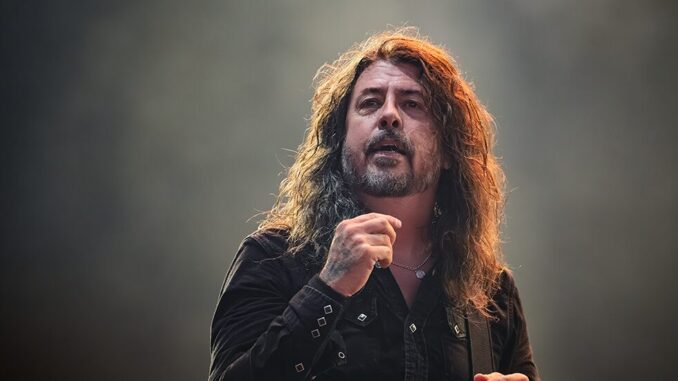
Three palm-muted notes. That was all it took. Three palm-muted guitar notes — the unmistakable opening of “All My Life” — and the entire festival grounds erupted simultaneously into the kind of roar that you can feel in your sternum before your brain has even fully registered what is happening, a sound so large and unanimous and full of feeling that it seemed to briefly re-arrange the molecules of the Napa Valley air. Dave Grohl and the Foo Fighters took the main stage as Saturday’s headliner and delivered precisely, magnificently, exactly what they have always delivered — one of the great rock and roll experiences on the face of the earth, an unbroken, relentless, joyful, emotionally overwhelming two-hour marathon of some of the finest songs written in the last thirty years of rock music, performed with the energy and commitment of a band that has never once taken any of this for granted. Grohl, wielding his guitar and his voice and his extraordinary stage presence with the ease and authority of a man utterly at home in the most public space imaginable, bounced and roared and grinned his way through anthem after anthemic anthem — “The Pretender,” “Learn to Fly,” “Best of You,” “Times Like These,” “Walk,” “My Hero” — each one arriving like a wave that lifted the crowd several inches off the ground and carried them forward. The band closed, inevitably and perfectly, with “Everlong,” and as those final, shimmering chords rang out across the Napa Valley Expo and faded slowly into the warm night air, there was a collective, held-breath silence of a second or two before the crowd exhaled in one enormous, grateful roar.
Day two of BottleRock 2026 had delivered something close to the platonic ideal of a rock festival Saturday — and the Foo Fighters, as they have done so many times before, ended it in the only way it could possibly end: triumphantly, loudly, and with the overwhelming feeling that being alive and being here for this was an extraordinary privilege.
BOTTLEROCK NAPA VALLEY
Website Facebook X