BottleRock Napa Valley 2026 day three: blues poets, funk royalty, a rising pop sensation, and the Backstreet Boys closing wine country in spectacular fashion.
Sunday at BottleRock has always carried a particular kind of emotional weight — the knowledge that the weekend is drawing to its close lending every performance added urgency, heightened sweetness, and a collective determination to squeeze every last drop of joy from a day you know cannot last forever. Day three of BottleRock 2026 delivered on that promise with an abundance and a generosity that was, quite frankly, staggering. A lineup that moved from intimate blues poetry in the warm Sunday morning sun, all the way through to a full-blown late-night spectacle of nostalgia and harmony that sent tens of thousands of festivalgoers home with a happiness they would be carrying well into the week. The rickshaws ferrying concertgoers through the surrounding Napa streets blasted Backstreet Boys hits on a loop from morning onward, as if the city itself had already made its peace with how the evening was going to end. In between, there was funk royalty operating fashionably late and not a soul willing to leave, a twenty-year-old pop phenomenon who threatened to steal the entire weekend, a Dallas rapper who brought the full force of Texas to wine country, and a Philadelphia indie-folk band who made the Prudential Stage feel like the warmest room in the world. BottleRock 2026 did not go quietly. It went magnificently.
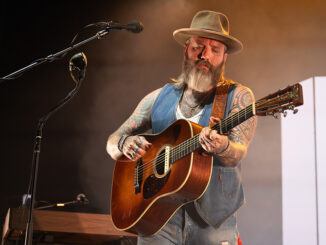
Sunday’s very first notes belonged to Alec Shaw, a young singer-songwriter whose quietly commanding presence and emotionally precise folk-pop made for a genuinely beautiful way to ease into the final day of the festival. Shaw took to the stage with little fanfare and maximum heart, his clear, unhurried voice carrying across the grounds in the fresh morning air with a naturalness and an ease that immediately set the tone for what promised to be a deeply human and richly felt day of music. There is a maturity to Shaw’s writing that exceeds his years — the kind of careful, specific emotional observation that marks a true songwriter as opposed to simply a performer, someone who has sat alone with feelings long enough to turn them into something universal and lasting. His guitar work was clean and unshowy, serving the songs rather than showcasing itself, the mark of an artist who understands that restraint and simplicity are often the most powerful tools available. The small but devoted crowd that gathered early to catch his opening set was rewarded with a performance of intimate grace and quiet power — the kind of morning-of-the-last-day set that BottleRock’s undercard has always done so brilliantly, giving audiences the gift of discovery alongside the spectacle of the known. Alec Shaw is an artist whose trajectory is pointing firmly, unmistakably upward, and those who caught him in the morning light at BottleRock 2026 will have every reason to feel pleasantly smug about their timing in the months and years ahead.
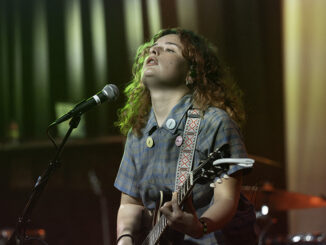
Following Alec Shaw with a distinctly different but equally compelling emotional palette, Betty Taylor arrived with the kind of guitar-forward indie-rock confidence that stops festival conversations mid-sentence and pivots heads toward the stage. A name that has been building genuine momentum in alternative circles, Taylor performed with the assurance of a musician who has spent considerable time in rooms both small and large, learning exactly what a song needs and what a crowd responds to, and refining her craft accordingly. Her voice carries a throaty, lived-in warmth that sits somewhere between folk confessionalism and indie-rock swagger, capable of softness and ferocity in equal measure, often within the same song, the shifts landing with a naturalness that speaks to a deep and genuine emotional intelligence. The band behind her was tight and sympathetic, providing an atmospheric sonic canvas that gave Taylor’s vocals the space to move freely and expressively without ever overwhelming them. Her Sunday morning BottleRock set confirmed her as one of the most interesting and genuinely exciting guitar-based songwriters currently emerging from the American indie landscape, an artist whose name will only grow louder and more prominent in the coming years.
Nate Myers, blues musician, poet, and raconteur, took the T-Mobile Stage for what turned out to be his third performance of the entire BottleRock weekend, having already appeared as a featured musician in the days prior. He opened his Sunday set with the kind of easy, warm, disarming charm that immediately makes a crowd feel like they are being let in on something precious and unhurried. Myers had been having quite the weekend — the day before, a friend had dragged him to the Williams Sonoma Culinary Stage just in time to witness Dave Grohl and celebrity chef José Andrés dancing together to “The Macarena,” Grohl in cargo shorts and with an apparently dangerous enthusiasm for hot peppers — and he laughed about that improbable spectacle from the stage with the genuine, delighted amazement of a man who still cannot entirely believe what his life has become. His music, rooted deeply in the blues tradition but filtered through a poetic sensibility and a personal storytelling instinct that is entirely his own, landed beautifully in the Sunday afternoon festival context — warm, unhurried, richly textured, deeply felt. Myers plays guitar with a reverence for the tradition that never tips into imitation, his slide work and fingerpicking carrying the unmistakable fingerprints of a musician who has sat with the blues long enough to make it genuinely his own. For festivalgoers discovering him for the first time, it was the kind of encounter that sends you home hunting through streaming services for everything he has ever recorded.
Girl Tones — sisters Kenzie Shultz and Laila Crowe — arrived with an irresistible, sun-drenched energy that felt tailor-made for a Memorial Day Sunday afternoon in wine country: a high-energy garage punk duo from Bowling Green, Kentucky, whose sound is filtered through a contemporary indie lens that gives everything they do a fresh, modern immediacy. Their stage presence was joyful and unguarded, the kind of collective effervescence that comes from a pair of musicians who genuinely like each other and who take real pleasure in the act of playing together, letting that pleasure spill outward into the crowd with an infectious, can’t-help-smiling quality that drew people in from across the festival grounds. The pounding drums and hard-edged guitar work were a particular highlight — reminiscent of early The White Stripes in their raw, two-person ferocity — delivered with a looseness and a warmth that made them sound entirely effortless and natural, the kind of playing that only looks easy because it has been practiced until it bleeds. Girl Tones understand something important and not universally grasped about the art of the festival set: that the goal is not to impress but to connect, not to demonstrate but to invite, and their Sunday performance was a masterclass in exactly that philosophy. The crowd around the stage grew steadily throughout their set, pulled in by the sheer, unguarded pleasure of the music, and sent away thoroughly charmed and thoroughly converted.
The Sunday morning-into-afternoon stretch had one of its most affecting moments when Izzy Escobar took the stage and immediately transformed the space around her with a combination of vocal power, emotional honesty, and performing charisma that felt far larger than the slot she’d been given and more than a little like the early chapters of an extremely significant story. Escobar is a singer of uncommon natural gifts — a voice that draws on the rich tradition of soul and R&B but carries its own unmistakable individual fingerprint, capable of extraordinary tenderness in quiet moments and of filling the festival air with a force and warmth that reaches the back of even the largest crowd. Her stage presence was radiant and assured without a trace of affectation, everything directed outward toward the audience with an open-heartedness and a generosity of spirit that made every person in the crowd feel personally included in something intimate and real. Escobar is the kind of performer who makes a stage feel like the exact right size regardless of its actual dimensions. She is an artist who, if there is anything resembling justice in the music industry, is about to become considerably better known, and BottleRock 2026 was precisely the kind of platform that deserves credit for giving her space to show the world what she is capable of.
There is a particular kind of quiet power that the very best folk music possesses — the ability to cut through the noise of a festival day and reach something still and essential in a listener, something that does not require volume or pyrotechnics but only the right voice, the right harmony, and the right song arriving at the right moment. Hailing from the great state of Montana, the duo of Buffalo Traffic Jam delivered exactly that at BottleRock 2026. A Sunday set of such warmth and understated beauty that it stood apart from the day’s louder offerings with a grace that felt genuinely, memorably special.
Frankie Cassidy and Nathan Ross met as students at Montana State University in Bozeman, united by a shared love of acoustic storytelling and the kind of unhurried, emotionally precise songwriting that evokes wide open landscapes and the feelings that live quietly beneath the surface of everyday life. In the Napa Valley sunshine on a Memorial Day Sunday, that music found a setting it was almost born for. Coming off a debut headlining run in which all dates sold out, including back-to-back nights at Los Angeles’ iconic Troubadour just four days before BottleRock, the duo arrived at the festival riding a wave of momentum that has seen them land on Amazon Music’s Best of 2025 Folk playlist, earn festival spots at Bonnaroo, Hinterland, and Bourbon & Beyond, and draw comparisons to Noah Kahan and Jonah Kagen from reviewers who have caught their live show and been immediately, helplessly won over. Their rich harmonies, stacked with an organic naturalness that speaks to two voices that have been learning each other’s movements over years of close musical partnership, floated out across the festival grounds with a clarity and a warmth that seemed to make the air itself feel slightly different, slightly softer, slightly more willing to hold still for a moment. Songs from their catalog — including viral breakthrough “Forgot Your Roots,” the streaming hit “Fool’s Gold,” and the more recent “Strangers Now” and “Milestone” — were delivered with the unshowy confidence of artists who trust their material completely and have no need to dress it up or perform around it. Their BottleRock set was the quietest thing on the day three schedule and, for those fortunate enough to stop and listen, one of the most quietly unforgettable.
The word came in stages, passed person to person through the crowd with the urgency of important news: Kool & the Gang were running ten minutes late due to technical issues. And then the next word came: they were taking the Prudential Stage now, right now, and the grass in front of the main stage was already packed three deep and people were gathering with an anticipatory joy that was palpable from fifty metres away. What followed, when Robert “Kool” Bell and his extraordinary gathering of musical colleagues finally launched into the set, was one of the great pure festival moments of the entire BottleRock 2026 weekend — a cascade of timeless funk and soul hits delivered by a band that has been making people dance for over five decades and has not for one moment forgotten exactly why or how to do it. Lead singer Shawn “Shawny Mac” McQuiller commanded the stage with a voice and a presence that honored the catalog’s legacy while bringing something entirely vital and alive to every note. The band behind him locked in with a groove and a tightness that made the technical delay feel like the most trivial footnote imaginable. “Celebration,” “Get Down on It,” “Jungle Boogie,” “Ladies’ Night,” “Fresh” — song after immortal song rolled out like an irresistible tide, the entire grass area in front of the Prudential Stage converted into one enormous, joyful dance floor that nobody wanted to leave. BottleRock does a great job booking a legacy act each day of the festival. Friday was Chaka Khan, Saturday was Joan Jett, and Sunday emphatically belonged to Kool & the Gang, and the description is apt. This was legacy performed not as tribute but as testimony: music still this alive cannot, by any honest measure, be called a relic.
Philadelphia indie-folk and Americana band Mt. Joy had been one of the most anticipated acts of Sunday’s lineup for a very specific and understandable reason — they are simply one of the warmest, accomplished, and deeply satisfying live bands operating in the American indie world right now. Their Prudential Stage set at BottleRock 2026 confirmed everything their devoted following has always known about them with a thoroughness and a joyfulness that left little room for argument. Frontman Matt Quinn opened the proceedings with a sunburned face and an enormous grin — the latter clearly having nothing to do with the former. They launched into “Orange Blood” early in the set to a crowd that responded with the kind of immediate, full-bodied, arms-out recognition that only comes when a song has genuinely embedded itself in people’s lives. Keyboardist Jackie Miclau delivered a breathtaking piano interlude between songs that brought the festival grounds to a hush before the band surged forward again, and when Quinn sang the line “half my love is on the run” from one of the afternoon’s many crowd favorites, the words floated out across the Napa Valley air and everyone in earshot sang them back without having to think about it for a second. Mt. Joy is a band that understands that sincerity and craftsmanship are not opposing forces but deeply complementary ones, and their BottleRock 2026 set was a beautiful, sustained demonstration of that understanding in action.
Dallas, Texas, has been producing hip-hop royalty for decades, but few artists in the current landscape carry the genre’s Texas DNA with as much raw, unfiltered conviction and sheer gravitational force as BigXthaPlug — Xavier Landum, affectionately known as “The Biggest Stepper.” He arrived at BottleRock 2026 and proceeded to deliver a hip-hop set of such thunderous, commanding presence that it stopped the casual Sunday afternoon foot traffic in its tracks and drew an ever-larger crowd of people simply unable to resist what was happening on that stage. Coming off a Rolling Stone cover story that documented his extraordinary journey from solitary confinement to rap fame and then to the country charts, BigXthaPlug arrived at BottleRock as one of the most compelling and genuinely fascinating stories in contemporary American music, an artist whose singles “Texas,” “Mmhmm,” and “Levels” cross genre lines that most rappers never even attempt to approach. Live, BigXthaPlug is a physically commanding and vocally authoritative presence, his baritone rolling out across the crowd with a weight and a certainty that is almost geological in its force, each verse delivered with the focus and the precision of a man who understands exactly what he is saying and exactly why it matters. The crowd stayed rooted, thoroughly and completely in the grip of a performance that reminded everyone present why Southern hip-hop, at its best, remains one of the most powerful and authentic forms of musical expression on the planet.
There was a moment during Sombr‘s main stage set on Sunday afternoon when the sheer scale of what this twenty-year-old has become in an extraordinarily compressed period of time became almost difficult to process. Shane Michael Boose — tall, lanky, dressed in sunglasses, a cropped leather jacket, and red corduroys — emerged on the Prudential Stage directly before the headlining Backstreet Boys to a crowd of a size that would have satisfied most artists three times his age. He opened with recent single “Homewrecker,” and immediately demonstrated that he is not an artist who is growing into the moment but one who has already, quietly and entirely, arrived. Fresh off a triumphant Coachella appearance and deep in preparation for his first headlining arena tour, Sombr performed with the command of a genuine rock star and the emotionally unguarded openness of someone who has not yet lost touch with exactly why they started making music in the first place. Standing on a raised platform behind his band, he threw himself around the stage and worked his wired microphone like a kid with the best toy in the world, his bedroom-pop soul given the full theatrical treatment — Michael Jackson and Prince energy wrapped around confessional, emotionally precise songs that his audience clearly knew intimately and completely. “Perfume” and “Undressed” generated screaming, word-for-word sing-alongs that suggested a fanbase that has memorized every syllable, and when he shouted, “If you think you’re too cool to jump, go to another f**king stage for all I care,” the crowd jumped — all of them, immediately and without hesitation. His debut album, I Barely Know Her, has established him as one of pop’s fastest-rising young acts, with “Back to Friends” and “Undressed” having turned him from a streaming breakout into a festival force of genuine and undeniable magnitude. The San Francisco Chronicle called his BottleRock set triumphant, and triumphant does not begin to cover it.
Atlanta, Georgia’s own Ludacris — Christopher Bridges, GRAMMY-winning rapper, actor, and one of hip-hop’s most enduring and beloved live performers — took the T-Mobile Stage as a thick cloud of California weed smoke settled over the crowd, and delivered a set that was, in the most direct and joyful sense of the term, a crash course in how to be an exhilarating, commanding, and completely irresistible rap star at forty-eight years old while performing like someone at least two decades younger. As the crowd danced with joy, everyone seemed to be on a mutual high, locked in step with the music — even the usually reserved security guards were compelled to move unabashedly to the beat. The structure of his set was unconventional but wildly effective for a festival context — less a traditional concert with hits and new material, more a brilliantly curated DJ set performed live, one banger rolling into the next with barely enough space to catch your breath, the energy never dropping for even a second from the moment he took the stage to the moment the 10 PM curfew finally, reluctantly, brought proceedings to a close. “Move Bitch,” “Stand Up,” “Money Maker,” “Southern Hospitality,” “What’s Your Fantasy,” “Area Codes” — each one landing with the full force of a catalog that contains more genuine, undeniable, era-defining hip-hop anthems than almost any other rapper of his generation. Ludacris bounced across the T-Mobile Stage with a physicality and an infectious good humor that made the crowd feel as though they were less watching a performance and more being invited to participate in a party that just happened to be exceptionally well soundtracked and brilliantly led. “All I Do Is Win” followed by “Get Back” closed things out in a raucous, glorious roar that sent the T-Mobile Stage crowd floating toward the main stage for the night’s final act with exactly the kind of kinetic joy you want preceding a headlining performance. Ludacris, at this stage of his career, is the very definition of a festival closer: professional, committed, generous, and incapable of delivering anything less than a completely excellent time.
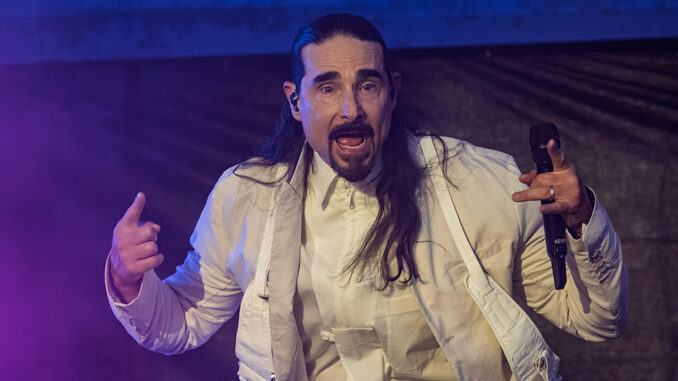
The bicycle rickshaws ferrying festival goers had been blasting the hits all day. The crowd, when it gathered in front of the Prudential Stage in the fading Sunday light, was of a size and a density that made the previous two nights’ main stage gatherings look almost modest by comparison — tens of thousands of millennials, their partners, their children, their confused parents, and more than a few pleasantly bewildered casual attendees who had simply followed the noise and the feeling and found themselves standing in front of something that turned out to be considerably larger than they had anticipated. And then the golden lights went up, the intro video rolled — making the Backstreet Boys look like Marvel superheroes. All five of them burst onto the stage dressed entirely in white to the opening bars of “Larger Than Life,” and the sound that came out of that crowd was not exactly a cheer but something more fundamental than that: a collective, full-bodied exhale of pure recognition and joy, thirty years of pop culture compressed into a single glorious moment of communal release. The boys — Brian Littrell, AJ McLean, Nick Carter, Kevin Richardson, and Howie Dorough — were, quite simply, extraordinary. Vocally crisp and harmonically impeccable, their choreography precise and full-bodied, their rapport with an audience that has been growing with them for three decades warm and genuine and shot through with the kind of real, unaffected gratitude that is impossible to fake. “It’s because of each and every one of you that we have a job,” Brian Littrell told the crowd, and the sincerity of it was disarming and complete. The setlist moved through “It’s Gotta Be You,” “As Long as You Love Me,” “More Than That,” “Show Me the Meaning of Being Lonely,” “Quit Playing Games (With My Heart),” and “I Want It That Way” — each one generating sing-alongs of such volume and unanimity that the sound seemed to lift physically from the crowd and rise up into the Napa night sky. Nick Carter, in an endearing and delightfully surreal moment during the group’s speech of thanks, name-dropped the Foo Fighters and Papa Roach in the same sentence — perhaps for the first time in recorded history — as he expressed the group’s gratitude for sharing a festival with such a diverse and extraordinary roster of artists.
The highlight of the main set was the stunning “The Call,” which closed the primary portion of the show with drama and grandeur that temporarily silenced the entire field. The group returned for the finale with “Everybody (Backstreet’s Back)” — delivered in a clubbier, more urgent remix than its original arrangement, a creative choice that divided opinion but could do nothing to diminish the “Thriller” – referencing choreography or the collective, uncontainable joy of a crowd that had been waiting for this exact moment for the entirety of a long, brilliant, beautiful, unforgettable festival weekend.
BottleRock Napa Valley 2026 ended not with the last note fading but with the last voice still singing — all of them, every single one, all the way to the back.